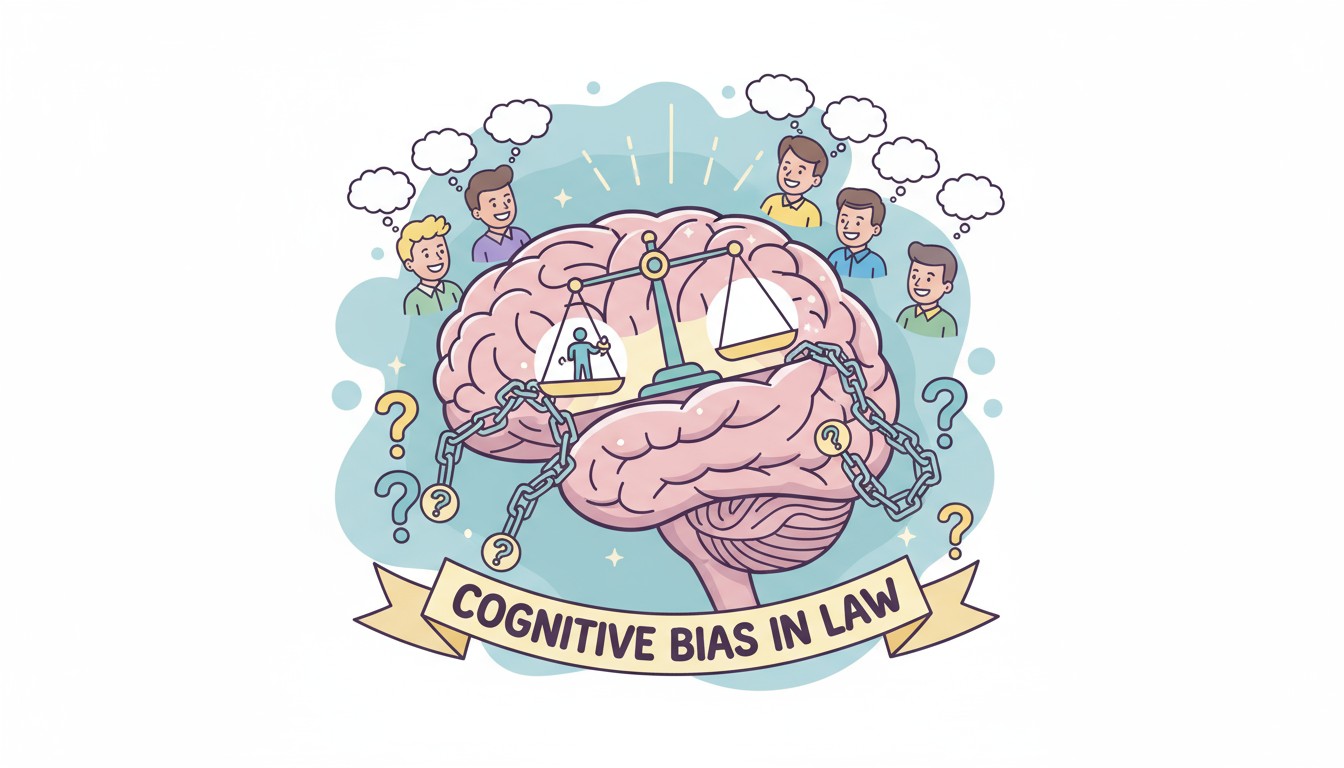
Let me teach you about the specific cognitive mechanisms that make genuine presumption of innocence psychologically difficult even for people who intellectually endorse this principle and who sincerely want to follow jury instructions requiring them to presume nothing from the accusation itself. The challenge runs far deeper than simple prejudice or closed-mindedness that better education might fix. Instead, the difficulty stems from fundamental features of how brains construct reality from incomplete information, how memory systems encode and retrieve relevant experiences, and how social cognition generates rapid judgments about other people’s character and intentions based on limited data that pattern-matching systems compare against stored templates built from past encounters and cultural narratives about what different types of wrongdoing look like and what types of people commit various offenses.
Think about what happens neurologically in the moments after you learn someone faces criminal charges but before you receive any actual evidence about what happened. Research using functional MRI technology demonstrates that regions of the brain associated with threat detection and social evaluation activate immediately upon learning about accusations, triggering rapid assessment processes that operate largely outside conscious awareness and that generate intuitive judgments about likelihood of guilt before deliberative reasoning systems engaged in careful evidence evaluation even begin their work. This means your brain has already reached preliminary conclusions during the time interval between reading that someone was arrested and consciously thinking about whether evidence supports conviction, creating situation where conscious reasoning must work against preexisting intuitions rather than starting from neutral baseline that genuine presumption of innocence would require. Studies from the American Psychological Association on legal decision-making document that these rapid automated judgments influence subsequent information processing in ways that make confirming initial impressions easier than revising them even when evidence should shift conclusions substantially.
How Confirmation Bias Hijacks Evidence Evaluation
Let me help you recognize how confirmation bias operates with particular power in legal contexts where people evaluate evidence about potential guilt, because this cognitive tendency represents perhaps the single most significant psychological obstacle preventing genuine presumption of innocence from guiding jury deliberations the way legal theory imagines. Confirmation bias describes the well-documented tendency for people to seek, interpret, and remember information in ways that confirm preexisting beliefs while overlooking, dismissing, or forgetting information that contradicts those beliefs. Notice that confirmation bias operates at three distinct stages of information processing rather than representing single distortion that occurs at one moment. During information seeking, you naturally pay more attention to evidence that confirms preliminary judgments while barely registering contradictory information that passes before your eyes without penetrating conscious awareness because attention systems filtered it out before encoding into memory. During information interpretation, you unconsciously apply different standards of scrutiny depending on whether evidence supports or contradicts favored conclusions, treating confirming evidence as valid at face value while subjecting disconfirming evidence to skeptical questioning about reliability, relevance, or alternative explanations.
During information recall when deliberating about verdict, you easily retrieve memories of evidence supporting the conclusion you favor while struggling to remember contradictory evidence that you encoded weakly during trial because attention systems never fully processed it in the first moment. Think about how these three-stage distortions compound to create powerful bias favoring initial impressions. Imagine a juror who forms preliminary belief that defendant is probably guilty based on arrest fact combined with brief prosecution opening statement. Throughout trial, that juror unconsciously pays more attention when prosecution presents evidence while mentally drifting when defense presents contradictory testimony. When prosecution evidence contradicts defense theory, the juror thinks carefully about which version seems more credible and finds reasons supporting prosecution account. When defense evidence contradicts prosecution theory, the same juror quickly dismisses concerns by generating alternative explanations or by noting that witness seemed nervous or had poor memory without applying similar skepticism to prosecution witnesses showing identical demeanor. During deliberations, the juror easily recalls prosecution evidence that made strong impression while barely remembering defense evidence that attention systems never fully processed, leading to sincere belief that evidence overwhelmingly supports conviction despite the defense actually presenting substantial contradictory information that equivalent observer without preliminary guilt presumption would weigh very differently.
Research demonstrates that confirmation bias operates even when people consciously try to evaluate evidence fairly and even when explicit instructions warn them about this tendency and request deliberate efforts to consider alternative interpretations. The seventy-eight percent of mock jurors rating defendants as probably guilty before hearing evidence reflects how powerfully mere accusation triggers preliminary judgments that confirmation bias then reinforces throughout subsequent information processing, creating self-fulfilling prophecy where initial impression shaped by little information determines final conclusion despite substantial evidence presentation that should enable revision. Legal scholars studying actual jury deliberations through post-trial interviews document that jurors often report feeling certain about guilt or innocence before closing arguments and that deliberations involve confirming initial impressions rather than genuinely open-minded collective reasoning about evidence that participants bring without predetermined conclusions. Studies from Northwestern Law’s Center on Wrongful Convictions examining cases where defendants were eventually exonerated reveal that confirmation bias frequently led jurors to interpret ambiguous evidence as supporting guilt and to discount or explain away evidence suggesting innocence even when that exculpatory evidence should have raised substantial reasonable doubt under dispassionate analysis.
The Availability Heuristic Makes Rare Crimes Feel Common
Now let me teach you about how the availability heuristic distorts probability judgments in ways that make certain types of criminal behavior seem far more common than reality supports, which in turn makes jurors overestimate likelihood that any particular defendant committed alleged crimes because vivid memorable examples come easily to mind creating false impression about base rates that should inform probabilistic reasoning about guilt given evidence. The availability heuristic describes the mental shortcut where people estimate frequency or probability based on how easily examples come to mind rather than on actual statistical frequency, causing systematic overestimation of dramatic memorable events that media coverage makes highly available in memory while underestimating mundane events that occur frequently but that lack memorable qualities making retrieval difficult. Think about how this operates with different crime categories. Child abduction by strangers represents extremely rare occurrence with statistics showing that children face vastly greater danger from family members or acquaintances than from stranger kidnapping, yet stranger abduction cases receive intense media coverage generating vivid memorable narratives that parents recall easily when assessing danger, leading to overestimation of stranger danger while underestimating more common but less memorable risks from people children know.
Similarly, serial murder represents tiny fraction of homicides yet dominates true crime media creating impression that serial killers lurk everywhere despite data showing that you are more likely to be struck by lightning than murdered by serial killer. Terrorism produces similar distortion where dramatic attacks generate extensive coverage making terrorist violence seem like common threat despite statistics demonstrating that ordinary criminal violence or automobile accidents pose orders of magnitude greater risk to typical person than terrorism. These availability-driven probability distortions matter profoundly in legal contexts because jurors bring skewed mental models about crime frequency into courtrooms where they evaluate whether particular defendant committed particular offense. When prosecution alleges that defendant committed crime type that jurors overestimate as common due to availability bias, jurors incorrectly judge the accusation as inherently plausible or even likely rather than starting from accurate base rate assessment recognizing that alleged behavior actually occurs rarely even though memorable media examples make it feel common.
Consider how this plays out in sex crime prosecutions where media coverage of predatory behavior by strangers or authority figures makes such crimes feel ubiquitous despite statistics showing that false accusations also occur at non-negligible rates that proper reasoning should incorporate into probability assessments about whether any particular accusation reflects true events versus other explanations including mistake or fabrication. Jurors influenced by availability bias enter deliberations with unconscious prior probability estimates suggesting that predatory sexual behavior occurs very frequently making any particular accusation seem likely true before examining specific evidence, creating mathematical setup where even modest prosecution evidence shifts posterior probability toward conviction more than the same evidence should shift beliefs starting from accurate priors reflecting actual base rates. The eighty-one percent who believe authorities would not pursue charges without strong evidence compounds this availability-driven probability distortion by adding another layer of mistaken reasoning where people incorrectly assume that prosecution implies high probability of guilt based on imagined prosecutorial decision-making processes that reality contradicts given that prosecutors face political pressures, resource constraints, and cognitive biases that lead to charges being filed against innocent people more frequently than most citizens realize.
Why We Commit the Fundamental Attribution Error
Let me help you see how the fundamental attribution error causes observers to overweight personal character and underweight situational factors when explaining other people’s behavior in ways that make defendants seem guilty based on who they appear to be rather than on what evidence demonstrates about what they actually did in specific situation under examination. The fundamental attribution error describes the systematic tendency to attribute other people’s behavior to stable internal characteristics like personality, values, or character while underappreciating how powerfully external circumstances shape actions, creating asymmetry where we explain our own behavior by referencing situational pressures we experienced while explaining identical behavior by others through character judgments that assume their actions revealed something essential about who they are as people. Think about everyday examples revealing this bias. When you arrive late to meeting, you immediately think about traffic, unexpected phone call, or other situational factors that delayed you beyond your control. When colleague arrives late to same meeting, you think about their poor time management, lack of respect for others, or general unreliability without considering that situational factors might explain their tardiness just as those factors explained yours.
When you snap at family member, you reference stress you were experiencing or legitimate frustration with their behavior rather than viewing outburst as revealing your personality. When family member snaps at you, you interpret their anger as reflecting their temperament, their tendency toward hostility, or their lack of emotional control rather than considering situational stressors they might be experiencing that make irritability understandable response rather than character revelation. Now apply this asymmetric attribution pattern to criminal trial contexts where jurors observe defendant’s behavior, appearance, and demeanor while hearing evidence about alleged crimes. The fundamental attribution error predisposes jurors to interpret everything about defendant through character lens, inferring from how defendant looks, speaks, or reacts emotionally during trial that their character makes alleged criminal behavior consistent with who they are as person, while underweighting situational factors that might explain both their current demeanor and their past behavior in circumstances surrounding alleged offense. Research in social psychology demonstrates that the fundamental attribution error grows more pronounced when observers have little information about situational context, when behavior being explained seems severe or consequential, and when cultural backgrounds emphasize individual responsibility over collective or situational explanations for conduct.
All three conditions apply maximally in criminal trials where jurors lack deep knowledge of defendant’s life circumstances, where charged behavior obviously seems serious enough to warrant prosecution, and where American culture particularly emphasizes personal responsibility and individual agency compared to collectivist cultures that more readily reference situational and social pressures when explaining behavior. This means American jurors face particularly strong psychological pressure from fundamental attribution error to judge defendants based on character inferences rather than on careful situation-specific evidence evaluation that presumption of innocence requires. Think about how this interacts with confirmation bias to create compounding distortion. Initial character judgment formed rapidly through fundamental attribution error generates preliminary belief about whether defendant seems like type of person who would commit alleged offense. Confirmation bias then operates throughout trial to seek and interpret evidence confirming that character-based judgment while discounting evidence suggesting defendant’s character differs from initial impression or that situational factors made alleged behavior unlikely regardless of character. The sixty-four percent who acknowledged that arrest alone changed opinion about person’s character reflects this fundamental attribution error in action, where mere fact of being arrested triggers character inferences about criminality that persist even when conscious reasoning recognizes that arrests occur for many reasons and that arrested individuals include substantial proportion who committed no crime.
Pretrial Publicity Creates Impossible Conditions
Now let me teach you about how pretrial publicity makes genuine presumption of innocence psychologically impossible in high-profile cases where potential jurors have consumed extensive media coverage presenting prosecution theories and evidence before trial begins, creating situations where voir dire questions about whether jurors can set aside pretrial knowledge represent legal fiction assuming cognitive capabilities that psychological research demonstrates humans simply do not possess regardless of good intentions or sincere beliefs about personal impartiality. Think about what happens cognitively when someone who will eventually serve on jury spends months reading news articles about case, watching television coverage featuring legal analysts discussing evidence, and engaging in social media conversations where friends share opinions about defendant’s obvious guilt or innocence. Each media exposure encodes information into memory systems that retrieve selectively during trial to confirm initial impressions formed through pretrial coverage. Each expert commentary shapes interpretive frameworks that jurors unconsciously apply when evaluating trial evidence. Each social conversation reinforces particular narrative about what happened and why, creating shared social reality that feels objectively true rather than representing one possible interpretation among many that evidence might support.
Research on memory reconstruction demonstrates that people cannot reliably distinguish between information they learned from pretrial publicity versus information they learned during trial testimony, because memory systems do not tag encoded information with source markers allowing perfect later discrimination between different acquisition contexts. This means jurors sincerely believe they are basing verdicts solely on trial evidence when actually their judgments reflect complex mixture of trial testimony, pretrial media content, social media discussions, and conversational exchanges with friends, all blended in memory systems that present integrated narrative feeling like coherent story derived from courtroom evidence alone. Additionally, psychological studies demonstrate that explicit instructions to disregard prejudicial information not only fail to eliminate that information’s influence on subsequent judgments but sometimes actually increase its impact through ironic process where attempts to suppress thoughts make those thoughts more accessible rather than less, creating situation where telling jurors to ignore pretrial publicity makes that publicity more influential than if no instruction had been given. Legal scholars studying remedies for pretrial publicity including change of venue, extended voir dire, and jury instructions consistently find that these procedural protections provide minimal actual protection against publicity effects that persist despite sincere juror efforts to comply with impartiality instructions.
The eighty-one percent believing prosecutors only file strong cases reflects partly how pretrial publicity shapes public perception, because media coverage occurs when charges are filed and typically presents prosecution theory as fact rather than as allegation requiring proof, creating impression that authorities have already determined guilt through investigation that preceded charges. By trial time, potential jurors have internalized prosecution narrative as default explanation of what happened, making defense burden of creating reasonable doubt psychologically backwards from what presumption of innocence requires, because defense must dislodge entrenched belief formed through pretrial publicity rather than starting from neutral position where prosecution builds case from zero baseline. Studies analyzing wrongful conviction cases reveal that pretrial publicity contributed to erroneous guilty verdicts in substantial proportion of cases where innocent defendants were eventually exonerated, demonstrating that publicity effects produce not merely theoretical concerns about fair trial rights but actual convictions of people who committed no crime because pretrial narratives overwhelmed evidence that should have generated acquittal. Research from the Innocence Project documenting wrongful conviction patterns emphasizes that media coverage creates what researchers call “narrative dominance” where prosecution story becomes culturally hegemonic interpretation that alternative explanations cannot displace even when evidence supporting those alternatives equals or exceeds evidence supporting prosecution theory.
The Smoke-Fire Inference Nobody Admits Making
Let me help you recognize how the folk wisdom suggesting that where there is smoke there must be fire operates powerfully though unconsciously in legal contexts to undermine presumption of innocence by creating inference that accusation itself constitutes evidence of guilt beyond serving merely as claim requiring proof. Think about the logical structure of proper reasoning under presumption of innocence. Someone makes accusation that defendant committed crime. That accusation by itself provides zero information about whether defendant actually committed alleged acts, because accusations can be true or false with probability that evidence must determine rather than assumption allowing. Yet psychological research consistently demonstrates that learning about accusation immediately shifts probability estimates toward guilt even before receiving any actual evidence about underlying events, revealing that people unconsciously treat accusation as evidence rather than as neutral claim awaiting verification. This smoke-fire inference reflects several psychological mechanisms operating simultaneously. Evolutionarily, social accusations typically occurred when people actually observed problematic behavior or had legitimate reasons for suspicion, making accusations historically reliable signals worth taking seriously for survival purposes even before investigating fully.
This created selection pressure favoring psychological mechanisms that take accusations seriously by default rather than dismissing them pending evidence, because the ancestral costs of ignoring true accusations about threats exceeded costs of overreacting to occasional false accusations that ancestral environments produced less frequently than modern legal systems where formal charges require lower evidence thresholds than informal social accusations needed in small-scale societies where reputation consequences deterred frivolous claims. Additionally, the smoke-fire inference reflects availability bias making memorable examples of legitimate accusations more mentally accessible than examples of false accusations that receive less media attention and that generate less dramatic narratives, creating skewed mental sample where accusation correlates strongly with actual wrongdoing in easily retrieved examples biasing probability estimates. The eighty-one percent believing prosecutors only file strong cases demonstrates this smoke-fire inference at institutional level, where people incorrectly assume that formal prosecution implies careful evidence evaluation establishing high guilt probability when actually prosecutors face incentives and pressures that produce charges against innocent people regularly enough that mere filing should not shift priors substantially toward guilt absent examination of actual evidence quality.
Think about how defense attorneys struggle against this smoke-fire inference throughout trials. Every defense strategy faces uphill battle against juror intuition suggesting that defendant would not be sitting in courtroom facing charges unless something improper occurred, creating baseline presumption favoring guilt that evidence must overcome rather than neutral starting point where prosecution builds case against properly skeptical evaluation. Defense attorneys report that jurors often ask during deliberations why defendant was arrested or charged if evidence seems insufficient for conviction, revealing that jurors unconsciously treat prosecution decision to charge as independent evidence of guilt requiring explanation rather than recognizing that charging decisions reflect prosecutorial judgment that might be mistaken and that provides no probative information about actual guilt beyond what trial evidence demonstrates. This smoke-fire inference combines with fundamental attribution error to create particularly toxic reasoning pattern where jurors infer from defendant’s presence in courtroom that their character makes alleged crime plausible, because prosecutors presumably investigated and concluded this person was type of individual who would commit such offense, creating circular reasoning where accusation serves as evidence of character which serves as evidence of guilt which validates accusation in self-reinforcing loop that makes genuine presumption of innocence cognitively impossible.
What This Means for Real Justice
Let me conclude by exploring what these cognitive realities mean for justice system functioning and for defendants whose liberty depends on jurors overcoming psychological tendencies that evolution designed for different purposes than evaluating legal evidence according to formal proof standards requiring presumption of innocence. The uncomfortable truth emerges that current jury trial system asks humans to perform cognitive feats that psychological architecture makes extremely difficult if not impossible, creating gap between legal ideals and psychological reality that produces systematic bias against defendants regardless of actual guilt or innocence. The seventy-eight percent forming guilt judgments before evidence, the sixty-four percent whose opinions change based on arrest alone, and the eighty-one percent overestimating prosecutorial reliability collectively demonstrate that cognitive biases stack heavily against genuine presumption of innocence functioning as intended by legal doctrine assuming rational jurors evaluating evidence from neutral starting position. This does not mean abandoning jury trials but rather requires acknowledging limitations and designing better safeguards including improved jury instructions that address specific biases rather than offering generic fairness appeals, expert testimony helping jurors recognize their cognitive vulnerabilities, and structural reforms like requiring unanimous verdicts or heightening proof standards to compensate for baseline guilt presumption that psychological reality creates despite legal fiction declaring innocence until proven guilty. The cognitive science reveals that justice requires working with human psychology as it exists rather than as we wish it were, accepting that perfect neutrality remains unattainable but that awareness of biases combined with procedural protections can reduce though never eliminate the gap between presumption of innocence as legal principle and presumption of guilt as psychological reality that brains naturally generate when confronted with criminal accusations triggering ancient threat-assessment systems optimized for survival rather than for justice.